Queen of Clubs - Colombia - Decaf

from £15.00

The Queen of Clubs has taken the throne, and she's left the caffeine at the door.

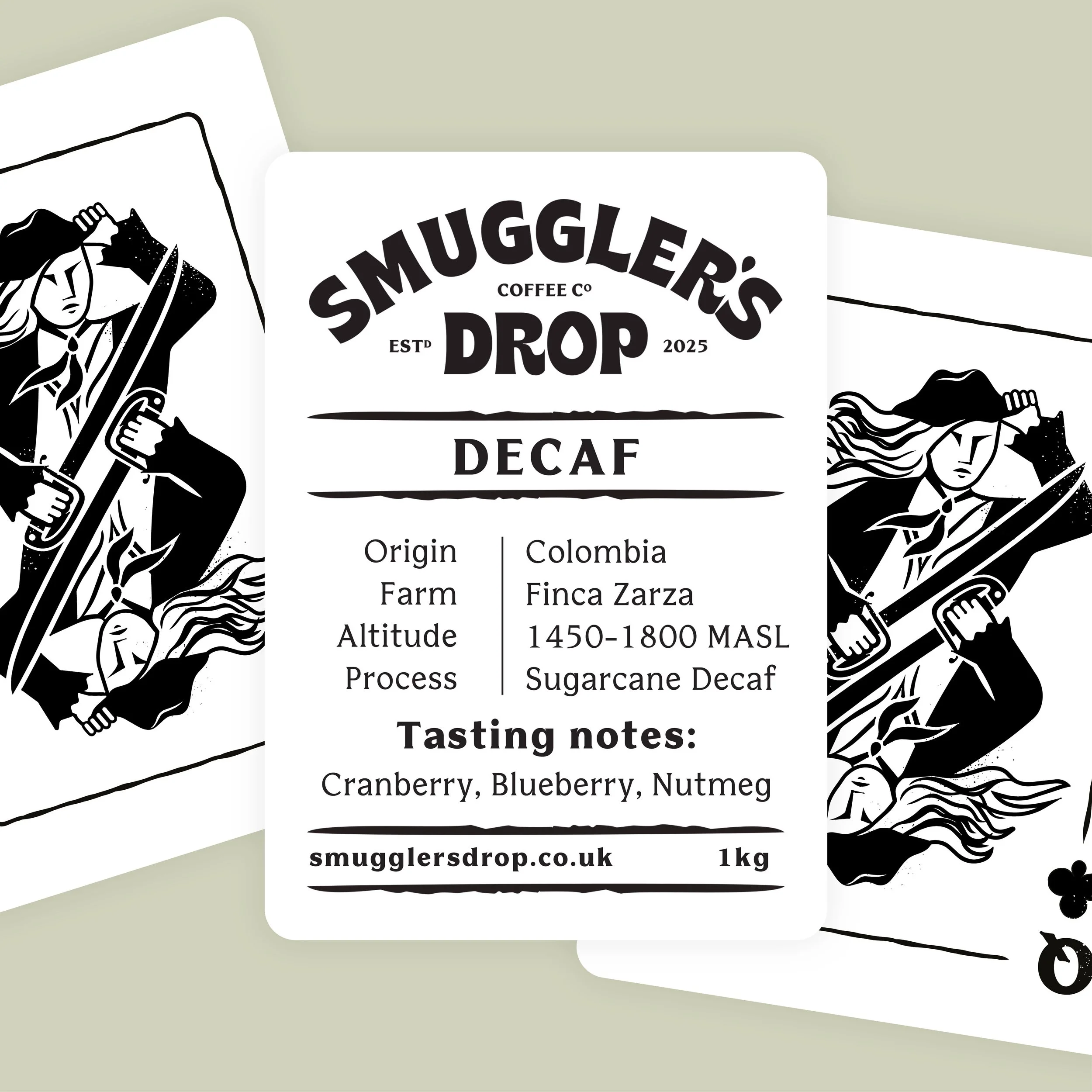
My new decaf is an anaerobic natural Pacamara from Finca Zarza in Huila, Colombia, decaffeinated using the sugarcane process. A natural compound made from fermented local sugarcane gently lifts the caffeine out and leaves the fruit right where it belongs.

Finca Zarza is run by the Gasca family, brothers Jhonatan and Johan, high in the hills of Bruselas near Pitalito. The farm is named after the wild blackberry bushes (zarza) that grow across their land. They're known for pushing the boundaries of processing, and their Pacamara regularly turns up on competition tables. Getting it as a decaf is a rare treat.

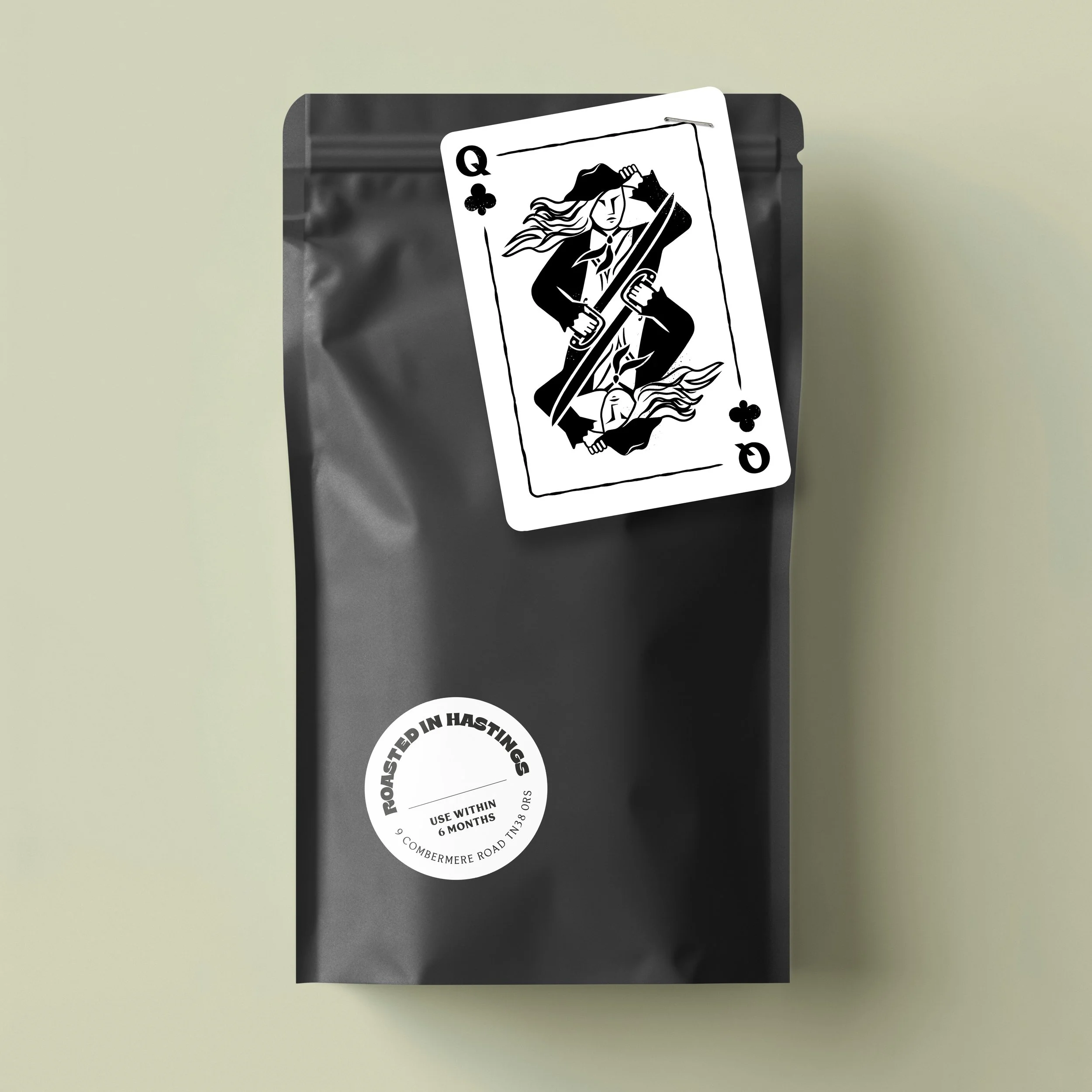
The artwork pays homage to Mary Read, who sailed alongside Anne Bonny (our last Queen) after years spent disguised as a man. A fitting face for the Queen of Clubs.

Expect cranberry, blueberry and nutmeg. Jammy, festive and the kind of decaf that doesn't taste like a compromise. Christmas in a cup, minus the 3am wake-up.

Works beautifully across all brew methods. Morning espresso, afternoon filter, evening cafetière, the Queen doesn’t mind a late night.

This is a limited lot. Once she's gone, she's gone.

Weight:
Grind Type:
Frequency:

The Queen of Clubs has taken the throne, and she's left the caffeine at the door.

My new decaf is an anaerobic natural Pacamara from Finca Zarza in Huila, Colombia, decaffeinated using the sugarcane process. A natural compound made from fermented local sugarcane gently lifts the caffeine out and leaves the fruit right where it belongs.

Finca Zarza is run by the Gasca family, brothers Jhonatan and Johan, high in the hills of Bruselas near Pitalito. The farm is named after the wild blackberry bushes (zarza) that grow across their land. They're known for pushing the boundaries of processing, and their Pacamara regularly turns up on competition tables. Getting it as a decaf is a rare treat.

The artwork pays homage to Mary Read, who sailed alongside Anne Bonny (our last Queen) after years spent disguised as a man. A fitting face for the Queen of Clubs.

Expect cranberry, blueberry and nutmeg. Jammy, festive and the kind of decaf that doesn't taste like a compromise. Christmas in a cup, minus the 3am wake-up.

Works beautifully across all brew methods. Morning espresso, afternoon filter, evening cafetière, the Queen doesn’t mind a late night.

This is a limited lot. Once she's gone, she's gone.

The Nerdy Bit

Variety - Pacamara
Altitude - 1,450-1,800 MASL
Cupping Score - 85

The Producer - Jhonatan Gasca reckons good things come out of mistakes, and he's made a few. His family have farmed coffee in Bruselas, Huila, for over 80 years and he's the fourth generation. Football came first, at the América de Cali academy, until injuries ended that dream at around 20. A course in 2013 got him hooked on fermentation. His first experiments flopped, with one natural sold off as reject coffee. Then he planted 2,500 Pink Bourbon trees after the family voted against it, and that lot opened the door to speciality.

Zarza is four family farms under one name, around 60 hectares in all. The Pacamara that became their flagship grew from seeds a friend no longer wanted, planted on an overgrown plot his father-in-law offered him. It's been all over the competition stage since: Jack Simpson placed second at the 2024 World Barista Championship with Zarza’s Pacamara, then won it in 2025 with their Papayo.

The Process - Anaerobic Natural, Sugarcane Decaf. Only ripe cherries are hand-picked, then floated to remove the light and defective ones. The cherries rest open to the air for 48 hours so the sugars start breaking down, then ferment whole in sealed bags for 150 hours. A thermal shock in hot water locks in the fruit before 10-12 days drying under parabolic covers. Finally the green coffee goes to Descafecol in Colombia, where ethyl acetate made from fermented sugarcane draws out the caffeine and leaves the flavour behind.